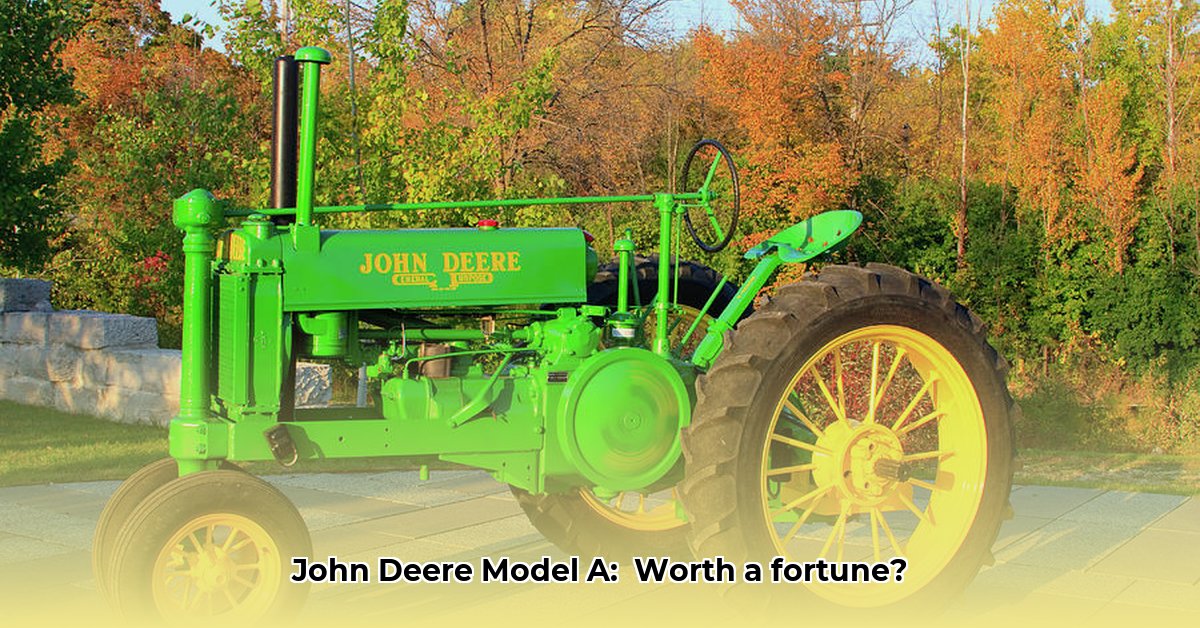
The John Deere Model A tractor, first introduced in 1923, wasn't just another piece of farm equipment; it was a revolution. This compact powerhouse, Deere's initial foray into row-crop tractors, fundamentally changed agricultural practices. Its robust build and versatility quickly cemented its place as a farming favorite, and even today, these classic tractors continue to fascinate collectors. But what makes these machines so special, and what can you expect to pay for one? Let's delve into the rich history and current market of the John Deere Model A. For more detailed pricing information, check out this tractor value guide.
A Legacy Forged in the Fields: The Model A's Historical Context
Imagine a time before massive, computerized farming machinery. The John Deere Model A was a workhorse of a different era, representing both simpler times and groundbreaking technological advancement. Its relatively small size and maneuverability, compared to its predecessors, made it ideal for a variety of crops and farming operations. It wasn't just a machine; it was a partner to farmers, helping them cultivate the land and feed the world. This enduring legacy explains its enduring appeal to collectors and enthusiasts. Isn't it remarkable how a simple tractor can have such a profound impact on history?
Model Variations: More Than Just One A
The Model A wasn't a one-size-fits-all solution. Deere produced several variations to cater to diverse farming needs. The most common is the basic Model A, but other significant variants include the AR (with adjustable rear wheels), the AO (designed for orchards and confined spaces), and several less common specialized versions with designations such as AI, AN, and AW for industrial uses. Each variation presents unique challenges and rewards for today's collectors. Identifying these subtle differences is key—a critical component of developing your expertise.
| Model Variant | Key Features | Typical Rarity | Factors Affecting Collector Value |
|---|---|---|---|
| A | The foundational model; the "standard" A | Common | Overall condition, originality of parts |
| AR | Adjustable rear wheels; increased versatility | Moderately common | Condition, completeness, row-crop modifications |
| AO | Orchard model; lower profile, smaller footprint | Less common | Condition, originality, specialized features |
| AI, AN, AW, etc. | Industrial and other specialized adaptations; rare | Rare | Extreme rarity, condition, functionality, history |
Finding a pristine Model A, meticulously preserved over decades, feels like discovering a time capsule. It's a tangible link to a bygone era, showcasing exceptional craftsmanship and representing a pivotal moment in agricultural history.
Under the Hood: Mechanical Specifications
To truly appreciate the John Deere Model A, understanding its mechanics is crucial. The heart of this machine is a reliable two-cylinder engine, typically delivering between 20 and 30 horsepower, with slight variations depending on the specific model. The four-speed unsynchronized transmission was surprisingly effective for its time, though it required more skillful operation than modern transmissions. Speed wasn't the priority—durability and consistent performance were the key design goals. These weren’t flashy machines; they were built for decades of hard work.
Market Overview: Pricing the Past
Pricing a vintage John Deere Model A is challenging. It’s not a precise science, and prices vary widely. A well-maintained, original Model A might sell for around $10,000, potentially less if it needs some work. However, a meticulously restored example, especially a rare variant in exceptional condition, could command significantly more—potentially exceeding $20,000 or even higher, depending on the specific variant and its condition. Several factors heavily influence pricing: condition (rust, wear, missing parts), rarity of the variant, and the presence of original parts and documentation (manuals, photos, ownership records). A complete and well-documented history significantly boosts value.
A Collector's Guide: Finding Your Perfect Model A
Acquiring a John Deere Model A is a rewarding pursuit, but a strategic approach is essential:
Prioritize Condition: Look for minimal rust, a complete set of original parts, and signs of attentive maintenance. A well-preserved tractor is a sound investment. Avoid those with significant damage or extensive rust.
Rarity Enhances Value: Less common variants (like the AO or specialized industrial models) generally command higher prices. Conduct thorough research on the various models.
Documentation is Key: Original manuals, service records, photographs, and even previous ownership history greatly increase the tractor's desirability and value.
Consider Parts Availability: Finding parts for older tractors can be a challenge. Before purchasing, investigate parts availability and plan for sourcing them if necessary. Engaging with online communities and specialized suppliers is highly recommended.
The search for the perfect Model A is a journey. Don't rush; research thoroughly, inspect carefully, and embrace the process.
Connecting with the Community
There's a vibrant network of resources for John Deere Model A enthusiasts. Online forums dedicated to vintage tractors, specialized collector clubs, and parts suppliers provide invaluable information, technical advice, and support. Engage with these communities, learn from experienced collectors, and allow the thrill of the hunt to guide you. The journey of finding and restoring a John Deere Model A is as satisfying as the final result itself.
Key Takeaways: Assessing Value Accurately
- The condition, originality, and completeness of a John Deere Model A are paramount in determining its value.
- Various Model A variations exist, each impacting its worth.
- Thorough research, including online resources and collector communities, is vital.
- Understanding the mechanical aspects and potential restoration needs significantly affect pricing.
- A hands-on inspection and, if possible, a professional appraisal are strongly advisable before any purchase.
The John Deere Model A isn't merely a tractor; it's a piece of agricultural history, a testament to enduring design and mechanical ingenuity. Understanding its history and market nuances gives you the tools needed to appreciate its value both practically and sentimentally.